Time Management Tips for Managers: The Complete Playbook for 2026
Practical time management tips for managers: protect focus time, cut unnecessary meetings, delegate well and help your team manage their time too.
Managers often lose a large share of their week to activities that don't directly move their teams forward — meetings that could have been emails, reactive firefighting instead of strategic thinking, and administrative tasks that should have been delegated.
The difference between a good manager and a great one often comes down to one thing: how they manage their time — and how they help their team manage theirs. This guide gives you a complete, research-backed playbook for mastering time management as a manager in 2026.
Whether you're leading a remote team of 5 or an organization of 500, these strategies will help you reclaim your time, lead with clarity, and drive measurable results.
Why Time Management Is Different for Managers
Individual contributors manage their own time. Managers manage their time and the conditions that affect their entire team's time. This distinction changes everything.
Poor time management as a manager doesn't just hurt your own productivity — it cascades. When you're reactive, your team becomes reactive. When you don't prioritize, your team can't prioritize. When you call unnecessary meetings, you fragment everyone's deep work time simultaneously.
Managers often spend much of their time on tasks that do not need their unique skills or decision-making authority. Much of the rest is often spent on activities that could be delegated, automated, or eliminated.
The strategies below address both dimensions: managing your own time effectively and creating conditions where your team can do the same.
1. Audit Your Time Before You Optimize It
You can't fix what you haven't measured. Before implementing any time management strategy, spend one week tracking exactly how you spend your time. Most managers are genuinely shocked by what they find.
A time audit reveals:
Which activities consume disproportionate time relative to their value
When your peak energy and focus hours actually occur
How much time is lost to context-switching and interruptions
Which recurring meetings could be eliminated or shortened
Use WorkSnaply's time tracking to capture this data without manually logging every activity. After one week, review your time breakdown by category — the patterns are almost always surprising.
Simply tracking where your time goes for two weeks often reveals easy improvements before you change anything else.

Tracking time reveals where hours actually go. Photo: Unsplash
2. Master the Eisenhower Matrix for Priority Setting
Named after President Dwight Eisenhower, this framework divides tasks into four quadrants based on urgency and importance. It remains one of the most powerful prioritization tools available — and most managers use it incorrectly.
Quadrant 1 — Urgent + Important: Crisis management, deadline-driven deliverables, genuine emergencies. Do these immediately.
Quadrant 2 — Not Urgent + Important: Strategic planning, relationship building, skill development, process improvement. This is where great managers spend most of their time.
Quadrant 3 — Urgent + Not Important: Most meetings, many emails, interruptions from others. Delegate or decline.
Quadrant 4 — Not Urgent + Not Important: Social media, excessive status updates, busywork. Eliminate.
The insight most managers miss: Quadrant 2 is where leverage lives. Time invested in Q2 activities (building systems, developing team members, strategic thinking) reduces the volume of Q1 crises over time. Managers who live in Q1 are constantly firefighting because they never invested in Q2.
Every morning, categorize your top priorities using this matrix. If a large share of your day is in Q1, your systems need attention.
3. Protect Deep Work Time — For You and Your Team
Cal Newport's concept of "deep work" — cognitively demanding tasks performed in a state of distraction-free concentration — is the highest-value activity for knowledge workers. According to Newport's research, the ability to do deep work is becoming increasingly rare and increasingly valuable.
For managers, this means two things:
Protecting your own deep work: Block 2-3 hours daily for strategic thinking, complex problem-solving, and high-stakes decisions. Treat these blocks as non-negotiable — decline meeting requests that fall within them.
Protecting your team's deep work: Implement a no-meeting block across your entire team — at least 3-4 consecutive hours daily where no meetings can be scheduled. Companies like Asana and Shopify have implemented meeting-free days with significant productivity improvements.
Research from the University of California, Irvine found that it takes an average of 23 minutes and 15 seconds to regain full focus after an interruption. Every unnecessary meeting or Slack notification costs your team nearly half an hour of productive output.

Deep work blocks are non-negotiable for high performance. Photo: Unsplash
4. Master Strategic Delegation
Delegation is the highest-leverage time management tool available to managers — and the most underused. Many managers hold onto tasks they should delegate because of three beliefs, all of which are false:
"It's faster if I do it myself" — true once, false over time
"Nobody else can do it as well as I can" — usually incorrect, always irrelevant for growth
"I don't have time to explain it" — this thinking guarantees you never will have time
The 70% Rule is a useful benchmark: if someone on your team can do a task at 70% of your quality level, delegate it. The time you reclaim will more than compensate, and the team member will improve with practice until they reach or exceed your level.
Delegation framework:
Match task to person — consider skills, capacity, and development goals
Define the outcome, not the process — explain what success looks like, not exactly how to achieve it
Set clear checkpoints — not micromanagement, but agreed milestones for complex tasks
Provide context — explain why the task matters, not just what needs doing
Trust, then verify — start from confidence, use data to identify genuine issues
For remote teams, effective delegation requires especially clear written communication. Document delegation decisions and outcomes in your team's project management tool so nothing falls through the cracks. See our guide on time tracking best practices for remote teams for how to monitor delegated work without micromanaging.
5. Ruthlessly Eliminate Meeting Waste
Meetings are the single largest time drain for most managers. Surveys consistently find that workers lose many hours each month to unproductive meetings.
The financial cost is staggering: a one-hour meeting with 8 people doesn't cost one hour — it costs 8 hours of collective productivity, plus the cognitive switching costs of everyone involved.
Apply the DEAR framework to every recurring meeting on your calendar:
Delete — Can this meeting be eliminated entirely? Does it produce decisions or actions?
Eliminate attendees — Does every person in the room actually need to be there?
Async alternative — Could a written update, Loom video, or shared doc replace this?
Reduce frequency/duration — Could a weekly meeting become bi-weekly? Could 60 minutes become 30?
Mandatory rules for meetings you do keep:
No meeting without a written agenda shared 24 hours in advance
Every meeting ends with clear action items, owners, and deadlines
Start and end on time, always — respect is currency
Default meeting length: 25 or 50 minutes (not 30 or 60) to allow transition time
6. Use Time Blocking — The Manager's Most Powerful Scheduling Tool
Time blocking means assigning specific blocks of time to specific categories of work on your calendar — and treating those blocks as immovable appointments with yourself. It is the most effective scheduling method for managers who need to balance strategic work with constant demands on their attention.
A sample time-blocked day for a remote team manager:
7:00–8:00 AM: Daily review — priorities, messages, planning
8:00–11:00 AM: Deep work block — strategic projects, complex decisions
11:00 AM–12:00 PM: Team communications — Slack, emails, async responses
12:00–1:00 PM: Lunch (non-negotiable break)
1:00–3:00 PM: Meetings and 1:1s — scheduled within this window only
3:00–4:00 PM: Admin and delegation — reviews, approvals, documentation
4:00–5:00 PM: Team support — open availability for questions
The specific blocks matter less than the principle: every hour of your day has an intended purpose before the day begins. Without time blocking, your calendar fills with other people's priorities.
Use WorkSnaply's time tracking alongside your calendar to see how your actual time use compares to your intended blocks — and adjust accordingly.
7. Implement Async-First Communication Standards
For remote team managers, the shift to async-first communication is the highest-leverage cultural change you can make. When your team defaults to asynchronous communication, you eliminate the constant interruptions that fragment everyone's day.
Async-first doesn't mean slow — it means intentional. Set clear response time expectations:
Routine messages: Response within 4-8 business hours
Priority messages (marked clearly): Response within 2 hours
Genuine emergencies: Phone call or designated emergency channel
This framework eliminates the anxiety of expecting instant responses while ensuring urgent issues can still be escalated quickly. GitLab, which runs the world's largest all-remote team with 2,000+ employees across 65+ countries, has built its entire operations on async-first principles — their communication handbook is the gold standard for this approach.
Learn more about how async communication improves overall team productivity in our complete guide.
8. Batch Similar Tasks to Eliminate Context-Switching
Context-switching — moving between different types of tasks — is one of the most expensive cognitive activities a manager performs. Research summarized by the American Psychological Association shows that switching between tasks carries cognitive "switching costs" as your brain re-orients to a new type of work.
Batching means grouping similar tasks together and doing them in dedicated time windows:
Email batching: Process email 2-3 times per day at fixed times — not continuously throughout the day
1:1 meeting batching: Schedule all 1:1s on the same day to cluster your collaborative work
Administrative batching: Approvals, expense reviews, and administrative decisions in one block
Strategic thinking batching: Planning, goal-setting, and forward-thinking in your deep work blocks
The cognitive benefit of batching compounds over time — your brain becomes more efficient at each type of work when it can build momentum without constant interruption.
9. Build a Weekly Planning Ritual
The best managers don't just manage days — they manage weeks. A consistent weekly planning ritual is what separates reactive managers from proactive ones.
Implement a Friday Review + Monday Preview system:
Friday Review (30 minutes):
Review what was accomplished vs. what was planned
Identify incomplete tasks and carry them forward consciously
Review your time tracking data from WorkSnaply — was time spent aligned with priorities?
Clear your inbox and task list to zero
Monday Preview (20 minutes — before checking messages):
Define your top 3 priorities for the week — the things that, if accomplished, would make the week a success
Block time for those priorities before meetings fill your calendar
Review team deadlines and potential blockers
Set your intention for the week
This 50-minute weekly investment produces dramatically better outcomes than starting each week reactively, responding to whatever lands in your inbox first.
10. Use Data to Manage Your Team's Time — Not Intuition
Great time management at the team level requires data, not guesswork. Most managers have only a vague sense of how their team's time is actually distributed — and that vagueness is expensive.
With accurate time tracking data from WorkSnaply's advanced reporting, you can answer questions like:
Which projects are consuming more time than estimated — and why?
Which team members are consistently overloaded vs. underutilized?
How much time is the team spending on high-value work vs. administrative overhead?
Where are the biggest opportunities to improve efficiency?
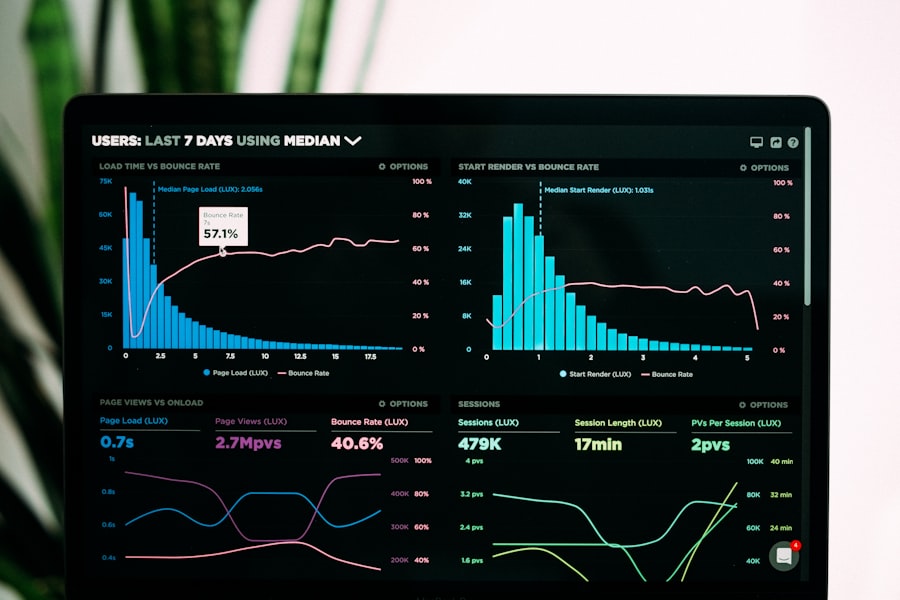
Data-driven time management replaces guesswork with precision. Photo: Unsplash
11. Manage Energy, Not Just Time
Time is finite and fixed — you cannot create more hours. But energy is renewable and manageable. The most effective managers understand that a high-energy hour produces far more output than a low-energy hour, regardless of the clock time.
The Energy Management framework, developed by performance researcher Jim Loehr and Tony Schwartz in their book The Power of Full Engagement, identifies four energy dimensions:
Physical: Sleep, exercise, nutrition, recovery
Emotional: Positive relationships, sense of purpose, stress management
Mental: Focus, creativity, cognitive challenge
Spiritual: Values alignment, meaning, contribution
Practical energy management for managers:
Schedule your most cognitively demanding work during your natural peak energy hours (typically morning for most people)
Take genuine breaks — a 10-minute walk produces more output than 10 minutes of tired, unfocused work
Protect sleep above almost everything else — sleep deprivation reduces cognitive performance by the equivalent of being legally drunk
Build recovery into your week, not just your day
Common Time Management Mistakes Managers Make
Understanding what to avoid is as valuable as knowing what to do. The most common time management failures for managers:
Confusing busyness with productivity — a full calendar is not evidence of effective management
Not saying no — every yes to a low-priority request is a no to a high-priority one
Perfectionism on delegated tasks — reviewing delegated work to 100% your standard defeats the purpose of delegation
Reactive email management — treating your inbox as a to-do list means other people set your priorities
Skipping planning time — "I don't have time to plan" is how you guarantee you'll never have time
Ignoring team time data — managing by intuition when data is available is a choice to be less effective
Final Thoughts
Time management for managers is ultimately about leverage. Every minute you invest in the right activities — strategic thinking, team development, process improvement, clear communication — multiplies across your entire team. Every minute you waste on low-value activities costs more than just your own productivity.
Start with a time audit. Then implement one strategy per week from this guide rather than trying to change everything at once. Sustainable improvement comes from consistent, compounding small changes — not dramatic overhauls that don't stick.
The managers who master these skills don't just perform better themselves — they build teams that perform better, stay longer, and achieve more. That's the real return on investment of time management.
See exactly where your team's time is going
WorkSnaply gives managers time tracking, project-level reports and team activity reports — without micromanaging your team.
Start Free 14-Day Trial — No Credit Card Required
Related reading
- Time Management Theory: 10 Frameworks Explained & Compared
- The Complete Guide to Remote Team Management
- 10 Best Employee Time Tracking Software in 2026
Frequently Asked Questions
What is the most effective time management technique for managers?
Time blocking combined with the Eisenhower Matrix is the most consistently effective approach for managers. Time blocking ensures strategic priorities get dedicated time before reactive demands fill the calendar, while the Eisenhower Matrix provides a clear framework for deciding what deserves that time in the first place.
How many hours per week should a manager spend in meetings?
Many managers find their calendars are dominated by meetings, so protect blocks of focus time. If you're consistently above this, audit your recurring meetings using the DEAR framework outlined above. Many managers discover they can cut or shorten a good number of recurring meetings without losing meaningful output.
How do managers track their team's time without micromanaging?
The key is tracking at the project and task level, not the minute level. Tools like WorkSnaply keep tracking in the background once the timer is started, providing project-level visibility without requiring employees to log every activity by hand. Focus on weekly summaries and project trends rather than daily activity monitoring.
What is the Pomodoro Technique and does it work for managers?
The Pomodoro Technique involves working in focused 25-minute intervals with 5-minute breaks. It's effective for individual contributors doing focused task work, but less suited to managers who need longer blocks for strategic thinking and who are frequently interrupted by team needs. Time blocking with 90-120 minute deep work sessions is generally more effective for management roles.
How can managers help their team with time management?
The most impactful things managers can do: implement no-meeting blocks to protect team deep work time, use time tracking data to identify and address workload imbalances, model good time management practices themselves, and eliminate unnecessary meetings and status update requests. See our complete guide on improving employee productivity for the full framework.